How to Spot Pump and Dump Crypto
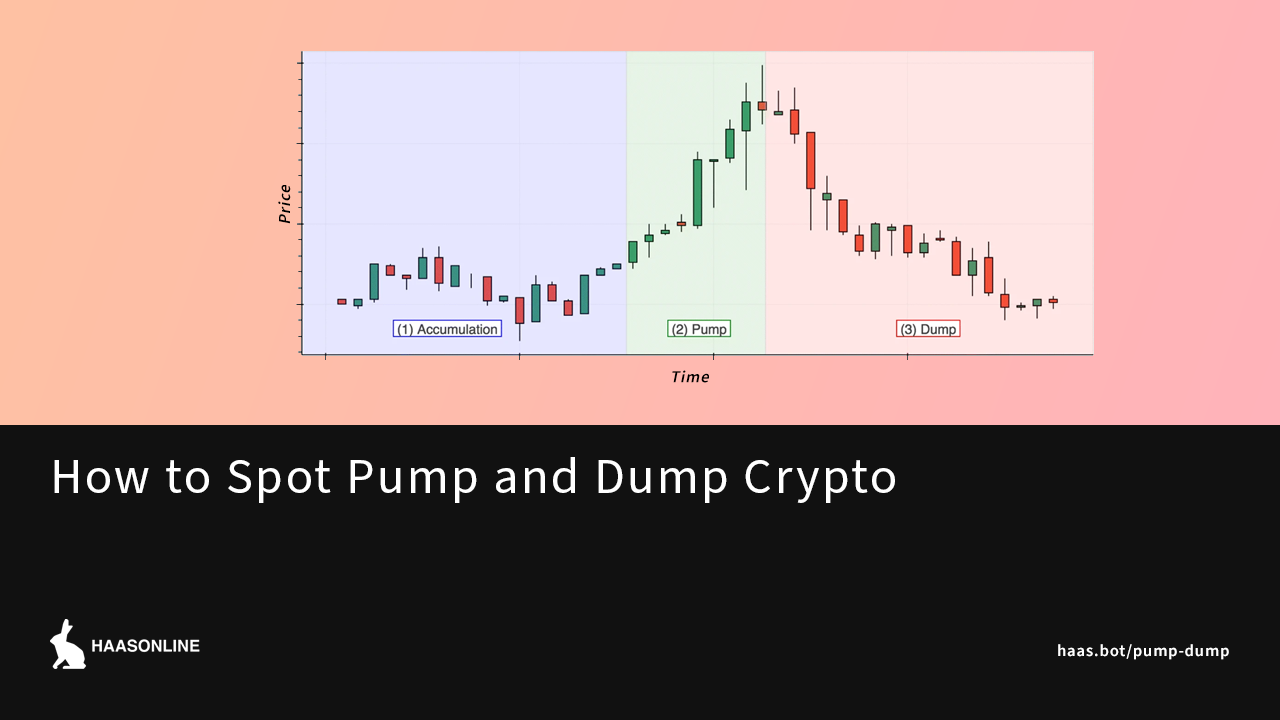
Pump and dump schemes are among the oldest forms of market manipulation, and the crypto market — with its relative lack of regulation, abundance of low-liquidity assets, and large retail participation — has proven to be fertile ground for them. The mechanics are straightforward: a group of coordinated actors accumulates a position in a low-cap asset quietly, then aggressively promotes it to generate buying interest from outsiders. As retail traders pile in driven by FOMO and fabricated hype, the price surges rapidly. The original buyers then sell their holdings into this manufactured demand, the price collapses, and latecomers are left holding a massively devalued asset.
The warning signs of a pump and dump are identifiable if you know what to look for. One of the most glaring red flags is an explosive, unexplained price surge in a low-volume, obscure token — often 50% to several hundred percent within hours. Legitimate price appreciation tends to build over time with increasing volume and identifiable catalysts; manipulated pumps shoot up almost vertically on charts. Simultaneously, social media channels, Telegram groups, Discord servers, and even paid influencers will flood with breathless posts urging people to buy immediately before "it's too late." This artificial urgency is a hallmark of coordinated manipulation.
Investigating the fundamentals — or lack thereof — of the asset in question is another critical check. Many pump targets are tokens with no real utility, vague or plagiarized whitepapers, anonymous development teams, and no working product. The trading volume will often spike dramatically while the order book is thin, meaning even small buy orders move the price significantly. Tools like on-chain analytics can reveal whether a handful of wallets are accumulating large positions simultaneously, which is a strong indicator of coordinated buying ahead of a promotional push. When wallet concentration is extremely high, the exit risk for ordinary buyers is severe.
Protecting yourself from these schemes starts with disciplined skepticism. Never make purchasing decisions based solely on social media buzz or recommendations from anonymous online communities. Always research the project independently, verify the team's credentials, and assess whether the claimed technology or use case is credible. Be especially cautious of assets that appear on lists distributed in trading groups with explicit price targets and time windows — these are often literal pump coordination signals. Even if you suspect a pump is underway, trying to time a quick profit is extremely dangerous; the organizers can exit in seconds, and by the time retail traders react, the dump has already begun.
For automated traders and bot operators, monitoring for unusual volume spikes in low-cap pairs can serve as a risk management signal. Some traders configure alerts or filters to avoid entering positions in assets that exhibit pump-like characteristics — parabolic price action, volume multiples of 10× or more above the 30-day average, and thin order books. While no filter catches every scheme, combining on-chain vigilance with disciplined trading rules reduces exposure to these predatory dynamics significantly. Regulatory scrutiny of pump and dump activity in crypto is increasing globally, but until enforcement catches up, individual awareness remains the strongest defense.