What is asset tokenization?
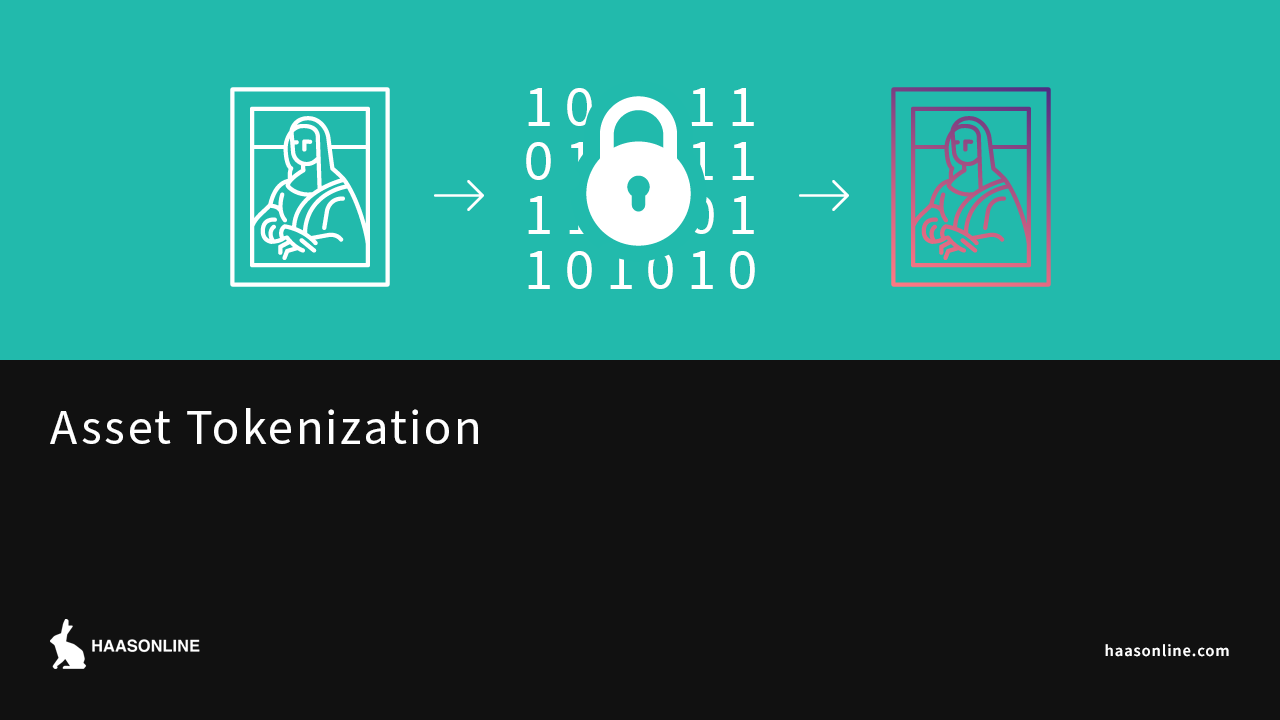
Asset tokenization is the process of representing ownership rights in a real-world or digital asset as a token on a blockchain. The underlying asset can be almost anything of value — real estate, fine art, company shares, commodities, intellectual property, or even future revenue streams. By creating a digital token that corresponds to fractional or whole ownership of the asset, tokenization encodes the ownership record and transfer rules into smart contracts, making the asset tradeable on blockchain networks. The result is a programmable, transparent, and potentially highly liquid representation of an asset class that might otherwise be illiquid or difficult to subdivide.
To understand how tokenization works in practice, consider real estate. A commercial property worth $10 million would traditionally require a single buyer or a small group of investors to purchase it outright. Through tokenization, the property ownership can be divided into 10 million tokens, each representing $1 worth of equity. These tokens can be sold to thousands of investors globally, who receive proportional claims on rental income and capital appreciation. The token smart contract can automate dividend distributions, enforce regulatory restrictions on who can hold the tokens, and record every ownership transfer immutably on the blockchain — eliminating the need for traditional title companies and reducing settlement times from weeks to minutes.
The benefits of tokenization are most pronounced for traditionally illiquid asset classes. Private equity, venture capital, fine art, and commercial real estate have historically been accessible only to institutional investors or high-net-worth individuals due to high minimum investment thresholds and long lock-up periods. Tokenization lowers the barrier to entry, enabling retail investors to gain diversified exposure to these assets with small amounts of capital. It also creates secondary market liquidity where little existed before — token holders can sell their position to other investors on a trading platform without waiting for a fund to mature or a property to sell.
Despite its promise, asset tokenization faces significant challenges. Legal and regulatory frameworks for tokenized securities vary dramatically by jurisdiction, and in many countries, selling tokenized equity or debt to retail investors requires navigating complex securities law, including licensing requirements and investor accreditation rules. The technology itself, while mature for pure crypto assets, requires careful integration with off-chain legal structures — smart contracts need to be backed by legal agreements that are enforceable in traditional courts. Oracle risk is another concern: if the smart contract relies on external data feeds to distribute income or verify asset values, the integrity of those feeds is critical to the system's proper functioning.
For crypto traders and DeFi participants, tokenized assets represent an expanding universe of on-chain instruments. Tokenized US Treasury bills, for example, have become popular in DeFi as a way to earn risk-free yield on stablecoins through protocols that hold the underlying government securities. Tokenized commodities like gold allow traders to gain exposure without dealing with physical delivery. As regulatory clarity improves and institutional adoption of blockchain infrastructure deepens, the scope of tokenized assets is expected to grow substantially. Staying informed about this space is valuable for any trader looking to understand where the next wave of DeFi innovation and on-chain liquidity is likely to emerge.